7 Ways To Add Career Exploration To Lessons
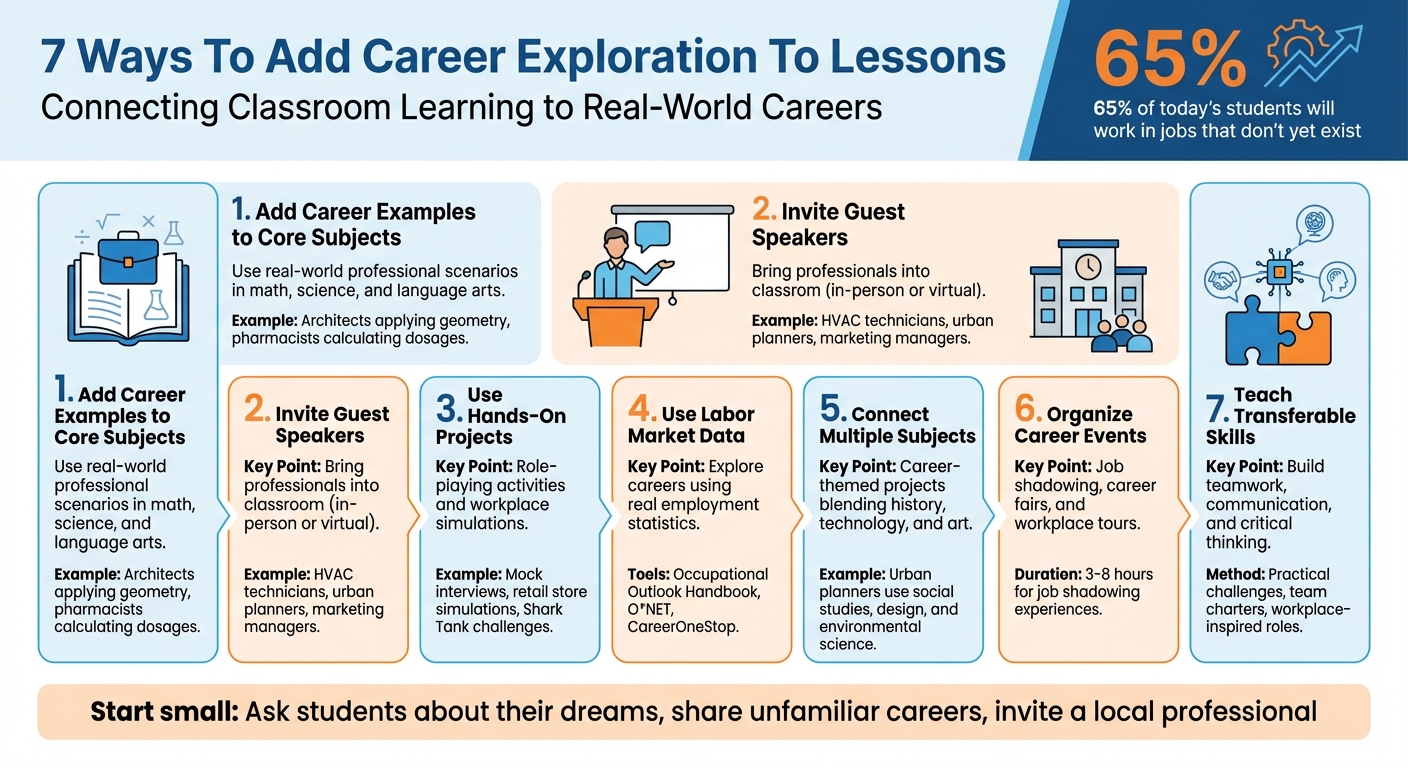
Students often ask, "When will I use this?" Career exploration answers that question by connecting classroom lessons to jobs, helping students see the purpose behind their studies. With 65% of today’s students likely to work in jobs that don’t yet exist, early exposure to careers builds skills like problem-solving and critical thinking. Here’s how teachers can bring career-focused learning into everyday lessons:
- Tie lessons to careers: Use real-world examples, like architects applying geometry or pharmacists calculating dosages.
- Invite guest speakers: Professionals can share insights about their jobs and connect studies to career paths.
- Hands-on projects: Role-playing activities, mock interviews, or simulations help students experience workplace scenarios.
- Use labor market data: Tools like the Occupational Outlook Handbook let students explore job growth, salaries, and education requirements.
- Cross-subject projects: Blend subjects like history and technology to show how careers overlap.
- Career events: Organize job shadowing, career fairs, or workplace tours for direct exposure.
- Teach transferable skills: Activities like team projects and debates build skills useful across any career.
7 Ways to Integrate Career Exploration into Classroom Lessons
Career Exploration Activities for Middle or High School Classrooms – Webinar
1. Add Career Examples to Core Subjects
Imagine replacing textbook problems with real-world professional scenarios. Instead of solving abstract equations, math students could calculate construction budgets like cost estimators or analyze infection and immunity graphs like actuaries studying pandemic trends. Tying lessons to real professions not only makes learning more engaging but also shows students how these skills apply in everyday work.
For instance, math classes could use actual labor market data to compare high-skill, high-wage, high-demand (H3) jobs in the local area. Students could practice graphing and data analysis with real statistics. Geometry, often seen as just shapes and angles, could take on new life when students explore how surveyors measure land for development projects. This hands-on approach naturally leads into science, where career connections become even more apparent.
In science, students can step into the shoes of professionals by tackling real challenges. They might analyze water samples for pollution like environmental scientists or calculate medication dosages as pharmacists do. Physics lessons could explore renewable energy projects, making abstract concepts like force and energy feel tangible and relevant.
Language arts can also connect to careers by focusing on technical writing. Students could draft assembly guides, write press releases, or even work on unique projects like Arcia Jeffries, a ninth-grader who created a chatbot for a Salvation Army homeless shelter. Her work highlights how technical writing and practical skills can come together to solve real-world problems.
2. Invite Guest Speakers and Feature Different Careers
Guest speakers can bring careers to life by offering students firsthand insights into various professions. Hearing directly from people like emergency responders, farmers, small business CEOs, or marketing managers helps students explore career paths they might not have thought about before. These discussions make specific roles more relatable and show how classroom learning connects to future opportunities.
The key is variety. Students benefit from learning about a broad range of careers - not just the ones often highlighted in the media. For instance, hearing from an HVAC technician, urban planner, or marketing manager can be just as inspiring as listening to someone in a more high-profile job. This diversity helps create engaging and meaningful sessions that link academic concepts with real-world practices.
To make these sessions impactful, prepare students with targeted questions about the skills required, the challenges of the job, and what a typical day looks like. If in-person visits aren't feasible, virtual platforms like Google Meet work well. You can also encourage students to interview family members or friends about their careers to build communication and networking skills.
After the session, follow-up activities can help solidify what students have learned. Career reflection journals or research projects on the speaker's industry - covering topics like required education and salary ranges - are great ways to deepen their understanding and connect their studies to practical career paths.
3. Use Hands-On Projects and Role-Playing Activities
Project-based learning and role-playing are powerful ways to turn classroom theory into practice. By stepping into roles like marketing manager or veterinarian, students tackle challenges that mirror real-life work environments. This not only helps them grasp the daily responsibilities of various professions but also sharpens essential problem-solving skills they'll carry with them for years to come.
Structured simulations take this approach a step further by closely imitating workplace scenarios. For instance, students might run a simulated retail store for a month, rotating through roles such as cashier, inventory manager, and customer service representative. In a zoo management simulation, they might take on positions like Marketing Manager, Veterinarian, or Animal Caretaker, completing tasks tailored to each role. These activities offer a grounded understanding of different careers, going beyond the polished portrayals often seen in movies.
Advanced role-playing exercises also prepare students for the professional interactions they'll face later. Mock job interviews help them practice clear communication and confident self-presentation. Scenario cards, which present dilemmas like a software developer managing a program crash or a journalist handling a last-minute source retraction, teach adaptability and critical thinking. Since 67% of people report feeling nervous about making phone calls, practicing professional phone conversations in class can build confidence for the future.
Entrepreneurship comes alive with activities like "Shark Tank" challenges, where students invent products, create business pitches, and present their ideas to classmates. One example of this hands-on learning is a construction safety project where students acted as construction managers, clearing obstacles, researching OSHA regulations, and delivering presentations to simulate industry practices. Another standout story is Arcia Jeffries, a 9th-grade participant in the IBM SkillsBuild program. She developed a chatbot to educate the public about a Salvation Army homeless shelter, earning digital credentials in artificial intelligence along the way.
"The SkillsBuild course I took was great because it allowed me to learn new and useful computer skills. [I built a] chatbot focused on educating the public on the Salvation Army homeless shelter..." - Arcia Jeffries, 9th-grade student
To ensure these activities are as impactful as possible, rotate students through different roles - leader, note-taker, presenter - so they can experience various aspects of workplace dynamics. You could even introduce a classroom economy, using tokens or points to simulate payroll systems for completing tasks and arriving on time. By designing projects that reflect real workplace challenges, educators can reinforce the practical value of what students are learning.
4. Use Labor Market Data and Online Tools
Data brings career exploration to life. The Occupational Outlook Handbook (OOH), published by the Bureau of Labor Statistics, provides detailed insights into hundreds of occupations, including median pay, entry-level requirements, and 10-year growth projections. Assigning students to explore occupations using this resource allows them to dive into job numbers, growth trends, and salary ranges.
The Occupation Finder tool takes this a step further by letting users filter careers based on education levels, projected growth, and salary expectations. For instance, a student interested in healthcare but hesitant about pursuing medical school can use this tool to identify roles accessible with an associate's degree that still offer strong growth opportunities.
"Teachers can use our resources to enhance curriculums using real world examples such as the latest statistics on employment, prices, and wages." - Bureau of Labor Statistics
Additional resources like O*NET provide extensive details on nearly 1,000 occupations and include tools like the Interest Profiler, which helps students align their interests with specific career paths. Meanwhile, CareerOneStop allows students to compare wages across metropolitan and smaller areas, offering insights into regional pay differences. For a more interactive experience, the Periodic Table of STEM Occupations lets users explore pay and employment data for science, technology, engineering, and math careers.
These tools can be seamlessly integrated into classroom activities. For example, students can compare occupations side-by-side using data on median wages and job outlooks. The "Education Pays" chart is another valuable tool, illustrating the connection between educational attainment, earnings, and unemployment rates - giving students a clearer understanding of how their academic choices impact their future earning potential.
sbb-itb-4f1eab7
5. Connect Multiple Subjects Through Career-Themed Activities
Blending subjects like history, technology, and art into career-themed projects helps students see how their learning applies to real-world jobs. It highlights that professionals rarely stick to just one discipline. Take urban planners, for example - they rely on social studies to understand community needs, artistic skills for design visualization, and knowledge of environmental science to evaluate ecological impacts.
Building on earlier examples of practical applications, these cross-disciplinary projects deepen the link between academics and potential careers. To align these projects with academic goals and career skills, you can focus on global themes such as the UN Sustainable Development Goals. These themes naturally encourage students to combine knowledge from science, social studies, and technology. For instance, integrating technology with social studies can prepare students for roles in software development or public relations.
Shifting your role from being the sole authority to a facilitator allows students to take charge of their learning. Strategies like the "Three Before Me" rule - where students consult three peers before seeking your help - encourage independent problem-solving, a skill employers highly value. This method nurtures critical thinking and fosters career readiness.
Many careers naturally bridge multiple disciplines. For example, technical photographers need both an artistic eye for composition and technical expertise in camera equipment and editing software. Similarly, environmental scientists combine lab testing skills with the ability to assess community impact and allocate resources effectively. By engaging in hands-on projects, students not only see the practical relevance of their studies but also feel more motivated to learn. These projects act as a stepping stone toward exploring more specialized career paths later.
This kind of integration builds versatile skills like design thinking, AI literacy, and professional communication, which are essential for navigating an unpredictable job market.
6. Organize Career Events and Workplace Experiences
Classroom discussions are a great start, but nothing beats real-world exposure to help students understand careers. Events like career fairs, job shadowing, and workplace tours bring job titles to life, giving students a firsthand look at what different professions involve. To make these events more engaging, skip the typical static booths. Instead, include interactive elements like technical simulations or hands-on breakout sessions where students can try out various careers in short rotations.
Planning these events takes time, so start at least six months ahead. Bring together educators and industry partners, and collaborate with local Chambers of Commerce, workforce boards, or state labor departments to connect with employers in high-growth or less familiar sectors. This approach helps tie classroom learning to practical, real-world insights. You can customize events based on grade levels - some can focus on general career awareness, while others dive into specific details. To prepare, ask students to research three careers they’re interested in and come up with questions for exhibitors. This preparation makes the experience far more meaningful.
For an even deeper dive, job shadowing allows students to spend 3–8 hours exploring a profession. These sessions often include a workplace tour, observing day-to-day tasks, brief interviews with professionals, and time for reflection. To maximize the experience, match students with hosts based on their career interests and hold an orientation for hosts about a month beforehand. This session can cover communication tips and how to work effectively with young participants. If possible, align these experiences with National Groundhog Job Shadow Day on February 2nd for added significance.
"STEM Premier [a career fair partner] is a powerful service which brought direction and guidance to my potential career choices by allowing me to explore careers based on my personal interests, goals, and passions." – Kris M., High School Junior
After these events, encourage students to reflect on their experiences. A "passport to the future" system can help them document their participation, while post-event surveys or reflection activities can solidify what they’ve learned. These follow-ups are essential - they help students connect their observations to actionable career planning and build the transferable skills they’ll need in any field.
7. Teach Transferable Skills Through Practical Challenges
Skills like teamwork, communication, and critical thinking are vital in any career path. With experts predicting that 65% of today’s primary school children will eventually work in jobs that don’t yet exist, it’s clear that building transferable skills is key to preparing students for an uncertain future. And what better way to teach these skills than through hands-on, engaging challenges?
Instead of relying on lectures, try practical activities. For example, organize gamified debates using color-coded Jenga blocks, where each color sparks a specific discussion topic. Start with lighthearted pop culture debates to get students comfortable, then gradually move to more complex issues. Before diving into team projects, have students create a team charter - a document outlining expectations for communication, meeting schedules, and how to handle disagreements. Activities like these mimic workplace dynamics and teach students how to navigate real-world challenges.
Practical projects not only teach collaboration but also show how skills like research, technical knowledge, and critical thinking come together in meaningful ways. For instance, assigning students to develop community-focused tech solutions can demonstrate how these abilities translate into impactful results.
You can also assign workplace-inspired roles - like Project Manager, Financial Analyst, or Developer - so students can see how their contributions fit into a bigger picture. To tackle common team issues, use case studies that highlight "problem behaviors", such as a team member not pulling their weight, and have students brainstorm solutions. Another idea? Set up gallery walks featuring teamwork quotes displayed around the room. Students can use colored stickers to indicate agreement or disagreement, sparking thoughtful discussions.
Not every student is a natural collaborator, so it’s important to model effective communication. Consider having students take a working style survey before forming teams. This helps them understand their strengths and how they complement their peers. As Michael D. Toth and David A. Sousa wisely put it:
"The brain that does the work is the brain that learns".
Conclusion
Incorporating career exploration into education doesn’t mean tearing apart your existing curriculum. The seven strategies discussed - from blending career examples into everyday lessons to teaching transferable skills through hands-on challenges - offer straightforward ways to help students see how their academic efforts connect to future opportunities. When students understand the purpose behind their work, they’re more likely to feel motivated.
At its core, career exploration is about self-discovery, not just ticking off a list of job titles. As Jennifer L.M. Gunn, Career and Future Readiness Specialist at My Unique Genius, explains:
"Schools and programs don't give enough time to the self-discovery process. A lot of times, teens follow the tide on what they're told to do. They apply to college because they're told to. They major in something because they've heard of it, not because it's truly their passion".
Your classroom can become a space where students slow down and reflect on their unique skills, interests, and the types of environments where they might thrive.
The stakes are real. Preparing students for an unpredictable future means equipping them with adaptability and foundational skills. By introducing them to a range of careers that go beyond what’s commonly portrayed in the media, you help them make better-informed decisions about their education, earning potential, and long-term growth.
Start small. Ask students what they dream of becoming. Share a career they’ve never heard of. Invite a local professional to speak. Each conversation and activity builds awareness and confidence. These simple actions tie directly to the strategies outlined earlier, ensuring every lesson has a connection to life beyond the classroom.
As the World Economic Forum reminds us:
"technical, critical thinking, and creative problem-solving skills will be in demand in the future and you can prepare for this new reality".
The work you do today shapes the workforce of tomorrow. It all starts with one conversation, one project, or one guest speaker. Take that first step, and watch your students uncover opportunities they never imagined.
FAQs
What are some effective ways teachers can add career exploration to their lessons?
Teachers have the power to make career exploration both engaging and meaningful by weaving practical activities into their lessons. For instance, they can plan virtual or in-person field trips, bring in guest speakers from a variety of professions, or assign creative tasks like designing career posters. These hands-on experiences allow students to see how what they learn in the classroom connects to real-world opportunities, often sparking curiosity about potential career paths.
Another effective strategy is to incorporate career-related projects into existing subjects. For example, students could dive into STEM careers through research assignments or use tools like career clusters to match their skills and interests with different job sectors. By seamlessly integrating these activities into their lessons, teachers can help students develop self-awareness and make more informed decisions about their futures.
What are some hands-on projects that help students explore career options?
Hands-on projects offer an excellent way for students to link their abilities and passions to potential career paths. For instance, designing a chatbot to address social issues like homelessness not only sharpens technical skills but also enhances communication abilities. Another approach could involve using worksheets or Venn diagrams to dive into different career clusters, helping students break down various professions and the skills they demand. Interactive STEM activities are equally impactful, allowing students to connect their personal interests to aligned careers. These types of projects keep learning engaging and encourage meaningful career exploration.
How can teachers use labor market data to support career exploration in the classroom?
Labor market data bridges the gap between classroom learning and future career opportunities by offering a clear picture of job trends, sought-after skills, and earning potential. With this information, students can explore career paths that align with their passions while gaining a better understanding of the workforce's evolving demands.
Educators play a key role in this process by using resources like regional labor market reports or career outlook guides. These tools help introduce students to growing industries and guide them toward pathways that align with their aspirations. When teachers weave this data into their lessons, they equip students with the knowledge to make thoughtful choices about their education and career goals, building both confidence and a strategic mindset for the road ahead.