How to Teach Networking Skills in High School
Networking is a skill students can start building in high school to prepare for future opportunities. Here's why it matters and how to teach it effectively:
- Why it’s important: Around 70% of jobs are found through connections, yet many students don’t learn networking in school. Building these skills early helps students secure internships, jobs, and mentorships while improving communication and social confidence.
- What students need to know: Networking isn’t just formal events - it’s about forming relationships with teachers, peers, and community members. It’s also about understanding how to ask for help, offer value, and maintain connections over time.
- How to teach it: Start by helping students map their current networks. Teach basic techniques like clear communication, professional etiquette, and follow-up strategies. Use classroom activities like role-playing and informational interviews to practice.
What Networking Means for High School Students
Defining Networking in Simple Terms
Networking is all about building relationships and sharing information with others. Picture it as creating a "web of support" - a group of people who can offer advice, guidance, and opportunities as you navigate life.
For high school students, networking doesn’t mean collecting business cards or attending formal events. It’s more about forming connections with people who share your interests, whether that's in school, extracurricular activities, or part-time jobs. As BigFuture by College Board puts it:
"Networking is getting to know people."
It’s a give-and-take process where you share your goals and interests while learning from others’ experiences.
Your network goes beyond just the people you know directly. It includes their connections too, expanding your reach to even more opportunities. High schoolers already have a built-in network - teachers, family, friends, neighbors, coaches, and classmates. Growing this network means putting effort into maintaining and strengthening these relationships over time. Like any meaningful connection, these relationships need care and attention to flourish.
This foundation of connections can lead to tangible benefits for students, even while they’re still in high school.
How Networking Helps Teens in Real Life
Networking isn’t just about future opportunities - it can have immediate benefits too. By building strong connections, high school students can tap into guidance, advice, and even opportunities like internships or part-time jobs. For instance, networking can help students secure college recommendation letters or learn insider tips about specific schools or majors. In fact, in 2022, nearly half (46%) of job seekers found opportunities through friends and family. This highlights how personal connections can open doors.
Take William, a high school junior who attended a local tech conference in August 2024. In this low-pressure setting, he struck up a conversation with another student. That simple interaction led to a summer internship at a tech startup, giving him valuable experience in coding and video game development. In another example, a student volunteering at a pet shelter impressed the manager with their customer service skills. This led to a recommendation for an internship the following summer. These stories show how networking can happen naturally in everyday situations.
But it’s not just about internships or jobs. Networking helps teens develop critical soft skills like effective communication, active listening, and making eye contact. Practicing these skills in a familiar environment builds confidence for future professional interactions. As Milly Vaughan, an Academic Advisor at Ascend Now, explains:
"Networking isn't just for professionals in suits; it's a power move for high school students too".
These examples make a strong case for teaching networking skills in schools. With practical guidance, students can start building connections early, setting themselves up for long-term success.
sbb-itb-4f1eab7
Taking action in high school through networking | William Beguhn | TEDxConcordCarlisleHighSchool
How to Teach Networking Skills: A Step-by-Step Approach
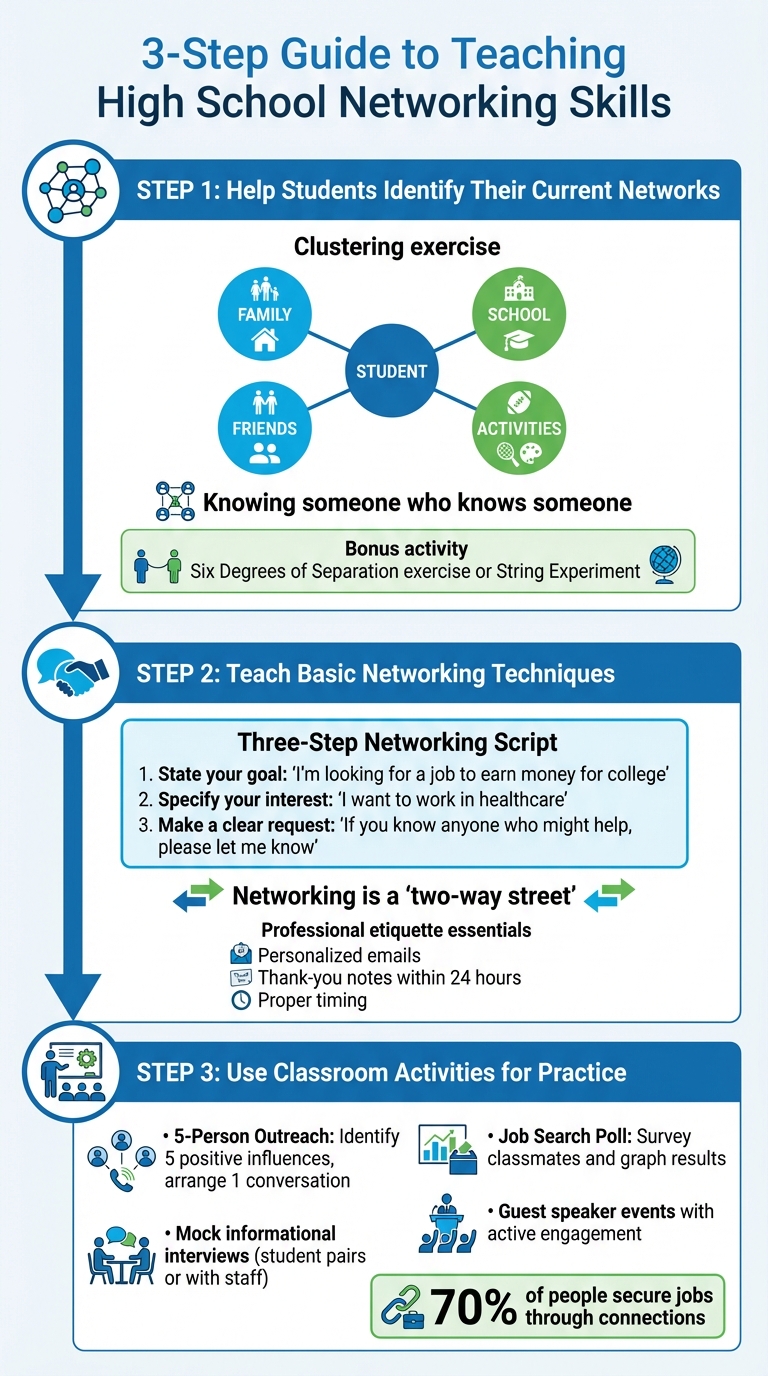
3-Step Guide to Teaching High School Networking Skills
Teaching networking skills is all about breaking it down into manageable steps: recognizing existing connections, practicing core techniques, and engaging in practical, low-pressure activities. Let’s start by helping students discover the networks they already have.
Step 1: Help Students Identify Their Current Networks
Many students don’t realize they already have a network. The first step is to make these connections visible. Begin by explaining networking as simply "knowing someone who knows someone". This definition makes the concept less intimidating and more relatable.
A clustering activity can help students visualize their social capital. Have them draw themselves at the center of a page, surrounded by circles labeled "Family", "School", "Friends", and "Activities." Within each circle, they list names - parents, siblings, teachers, neighbors, teammates, coworkers, and even people they encounter at local businesses. Julia Freeland Fisher, Education Director at the Clayton Christensen Institute, highlights the value of this exercise:
"Make the invisible visible. It's a very practical way to teach students you are already a member of a social network across different domains and categories."
Encourage students not to dismiss connections too quickly. For instance, even if a parent doesn’t work in their field of interest, that parent might know someone who does. This is where the concept of "weak ties" comes in - those loose connections that often lead to unexpected opportunities. Research shows these weak ties can play a key role in career connections.
To demonstrate how networks function, try the Six Degrees of Separation exercise. As a class, trace a chain of connections to a distant figure like the mayor or a local business owner. Another option is the String Experiment: start with one student holding a ball of string, then pass it along as they share job leads with classmates. Soon, the entire room is connected by a web of string, visually showing how information spreads.
Step 2: Teach Basic Networking Techniques
Once students recognize their existing networks, it’s time to show them how to use these connections effectively. Teach them how to ask for help in a way that’s polite and professional. Introduce the Three-Step Networking Script:
- State your goal: "I’m looking for a job to earn money for college."
- Specify your interest: "I want to work in healthcare."
- Make a clear request: "If you know anyone who might help, please let me know."
This script provides a simple framework for clear and confident communication. Stress that networking is a "two-way street" - students should share their goals while also listening to others. It’s about building relationships, not just collecting contacts.
Professional etiquette is another key skill. Teach students how to write personalized emails with clear subject lines, schedule video chats with calendar invites, and follow up with thank-you notes within 24 hours of meeting someone. Role-playing exercises can help them practice distinguishing between professional and pushy behavior. For example, compare a scenario where a student demands a job at a party versus one where they politely ask for a convenient time to discuss an opportunity.
Timing and context are equally important. Networking should happen when the other person is relaxed and open to conversation - not when they’re stressed or distracted. This helps students develop social awareness and respect boundaries, skills that go beyond networking.
Step 3: Use Classroom Activities for Practice
Students need a safe environment to practice networking before applying these skills in real-life situations. Low-pressure activities allow them to make mistakes and learn from them. One effective exercise is the 5-Person Outreach: students identify five positive influences in their current network, then arrange one conversation with one of those people to discuss career readiness or industry contacts.
Mock informational interviews are another great tool. Pair students together or involve staff members so they can practice asking questions about someone’s career path or college experience. The focus isn’t on asking for a job but on learning from others’ experiences.
The Job Search Poll is both fun and eye-opening. Have students survey classmates with part-time jobs to find out how they got hired. Then, graph the results to show how many jobs came through networking versus other methods. This makes the statistic that 70% of people secure jobs through connections feel more personal and relevant.
Guest speaker events can also double as networking practice. Encourage students to prepare something to share about themselves with the speaker, turning these sessions into interactive relationship-building opportunities. This shifts the focus from passive listening to active engagement, helping students feel more confident in real-world networking scenarios.
Teaching Digital Networking Tools
In today’s digital-first world, students need to know how to navigate online platforms effectively and safely. With 92% of teens going online daily, many are already comfortable with technology. The challenge lies in helping them shift from casual social media use to professional networking platforms.
Getting Started with Professional Platforms
LinkedIn stands out as the go-to professional networking platform, boasting over 1 billion users. It’s a key tool for recruiters and HR professionals to find candidates. For high school juniors and seniors (16 and older), LinkedIn is an excellent starting point for building their professional presence.
Before jumping into LinkedIn, students should set up a professional email address - something simple like firstname.lastname@email.com. Many students rely on school-issued emails that expire after graduation, which can create challenges later. For instance, during a school career day session, 60% of students didn’t have a professional email address, highlighting the importance of addressing this early.
When it comes to building a LinkedIn profile, guide students through the essentials. A professional photo can make a huge difference - profiles with such photos are 14 times more likely to be viewed. Encourage them to craft a concise, engaging headline that highlights their goals or achievements, such as, “Aspiring Biomedical Engineer with a Passion for Research.” In the "About" section, students should use storytelling to showcase qualities like resilience and determination instead of merely listing traits.
Here’s a quick breakdown of what high schoolers can include in their LinkedIn profiles:
| LinkedIn Profile Section | Recommended Content for High Schoolers |
|---|---|
| Headline | Short and engaging; highlights goals or key achievements |
| Experience | Part-time jobs, internships, volunteer roles, or leadership positions in clubs or sports |
| Featured | Links to projects, portfolios, or school-related achievements like newspaper features |
| Skills | A mix of 5–10 hard skills (e.g., coding, foreign languages) and soft skills (e.g., teamwork, communication) |
| Education | Current high school, GPA, advanced programs (AP/IB), and notable honors |
Once profiles are set up, teach students to reverse-engineer career paths by researching professionals in their dream roles. They can examine the education, skills, and experiences these individuals have pursued. This exercise helps students connect their digital networking skills to their future aspirations.
Additionally, encourage students to earn digital badges through platforms like IBM SkillsBuild. These credentials, which cover topics like AI and cloud computing, can be showcased on LinkedIn profiles to boost their visibility.
Finally, students should follow organizations and thought leaders in their fields of interest. Engaging with posts by liking, commenting, or sharing insights can help them build connections and stay informed about industry trends. As one Edutopia article explains:
"A strong PLN [Personal Learning Network] is one that is dynamic, evolving, and active. It's more of a dialogue or conversation between members than a static road sign for passersby".
Once their profiles are polished, the next step is mastering online etiquette and prioritizing digital safety.
Online Etiquette and Safety Guidelines
Professional digital networking requires a formal, respectful tone. Teach students how to tailor their language for different audiences.
One way to practice is by drafting LinkedIn InMail messages to alumni or local professionals in a classroom setting. These messages should include clear subject lines and personalized content. Remind students to send thank-you notes within 24 hours when someone offers advice or assistance. Daniel Vargas Campos, Program Manager at Common Sense Education, emphasizes the importance of these skills:
"Digital citizenship helps SEL be more effective by making SEL more responsive to the demands and opportunities that technology brings into students' lives".
Safety is non-negotiable. Students should never share sensitive information like full names, addresses, or phone numbers without adult permission. They should also avoid accepting connection requests from strangers, keep passwords private, and report any uncomfortable interactions to a trusted adult. Teach them to recognize “red flag feelings” - physical or emotional discomfort that signals a digital interaction might be unsafe.
Students also need to understand the impact of their digital footprint. About 67% of college admissions officers believe it’s fair to review applicants’ social media profiles when making decisions. Encourage them to curate an online presence that reflects their goals and achievements. If they face cyberbullying or harassment, advise them to document the incident by saving or printing evidence rather than responding to rude comments.
To help students navigate tricky online situations, introduce the "Feelings & Options" routine. This involves:
- Identifying the emotions involved.
- Exploring possible actions.
- Predicting the outcomes of each option.
- Choosing the best course of action.
This approach encourages students to pause and think critically before posting or responding, helping them make thoughtful decisions that will benefit them in both their personal and professional lives.
Building Long-Term Networking Skills and Habits
Once students grasp the basics of networking, the next step is learning how to maintain and grow those connections over time. Networking isn’t a one-and-done task - it’s an ongoing process that demands regular attention and effort. A strong, adaptable professional network is critical for navigating career changes throughout life. Without consistent care, relationships can fade, much like an untended garden.
As Julia Freeland Fisher aptly puts it:
"Investing in networks is an equity imperative. When it comes to thriving, opportunity sits at the cross-section of what students know and who students know."
Teaching Students to Follow Up
Staying connected after the initial meeting is crucial for building lasting relationships, yet many students struggle with follow-up. This is a skill worth mastering, as it helps solidify connections and keeps the door open for future opportunities. Educators can stress the importance of the 1-3 day rule: students should send a personalized follow-up email within a day or two of meeting someone. Including a custom LinkedIn connection request that references their conversation adds a thoughtful touch. For an extra layer of sincerity, a handwritten thank-you note can leave a lasting impression.
Encouraging students to end conversations with, “Can I get your email address so I can follow up later with any questions?” ensures they have a clear path for further communication. Additionally, teaching students to adopt a "managing up" approach - making it easier for their contacts to assist them by providing resumes or specific follow-up reasons - can be highly effective. Simple actions like liking LinkedIn posts, commenting on updates, or sharing relevant articles keep students visible and engaged with their network.
Here’s a quick guide to follow-up methods:
| Follow-Up Method | Recommended Frequency | Purpose |
|---|---|---|
| Thank-you Email | Within 24–72 hours | Show appreciation and reinforce the connection |
| LinkedIn Engagement | Weekly/Bi-weekly | Stay on their radar by interacting with updates |
| Goal Updates | Quarterly | Share achievements and maintain relevance |
| Article Sharing | As relevant | Provide value by sharing useful information |
Helping Students Track Their Progress
To help students evaluate and refine their networking efforts, practical tools and strategies can make all the difference. For example, a content calendar can bring structure to their professional social media presence. Students might plan to share a project on Monday, post an industry article on Wednesday, and end the week with an inspiring quote on Friday. Building digital portfolios outside of school systems ensures they have a lasting platform to showcase their work even after graduation. Additionally, simple yet professional business cards with their name, career focus, and contact details can make a strong impression during in-person exchanges.
Reflection is another powerful tool. Teachers can guide students to assess their networks using four key dimensions:
- Quantity: How many professional contacts they have.
- Quality: The depth of trust and mutual respect in these relationships.
- Structure: The variety of industries represented within their network.
- Mobilization: Their ability to reach out and seek help when needed.
This framework helps students identify areas where they may need to engage more or diversify their connections. By tracking progress and staying intentional, students can build a network that supports their professional growth for years to come.
Using DashK12 Resources for CTE Teachers
For educators stepping into the classroom from professional careers, teaching essential skills like networking can feel overwhelming. DashK12 steps in to make this transition smoother. Designed specifically for Career and Technical Education (CTE) teachers, the platform offers structured resources that help bridge the gap between industry expertise and effective teaching practices. Rated 5/5 by users, DashK12 has gained a reputation for being practical and responsive to the needs of educators.
DashK12's Online Course: 'The Ultimate Guide to Teaching CTE'
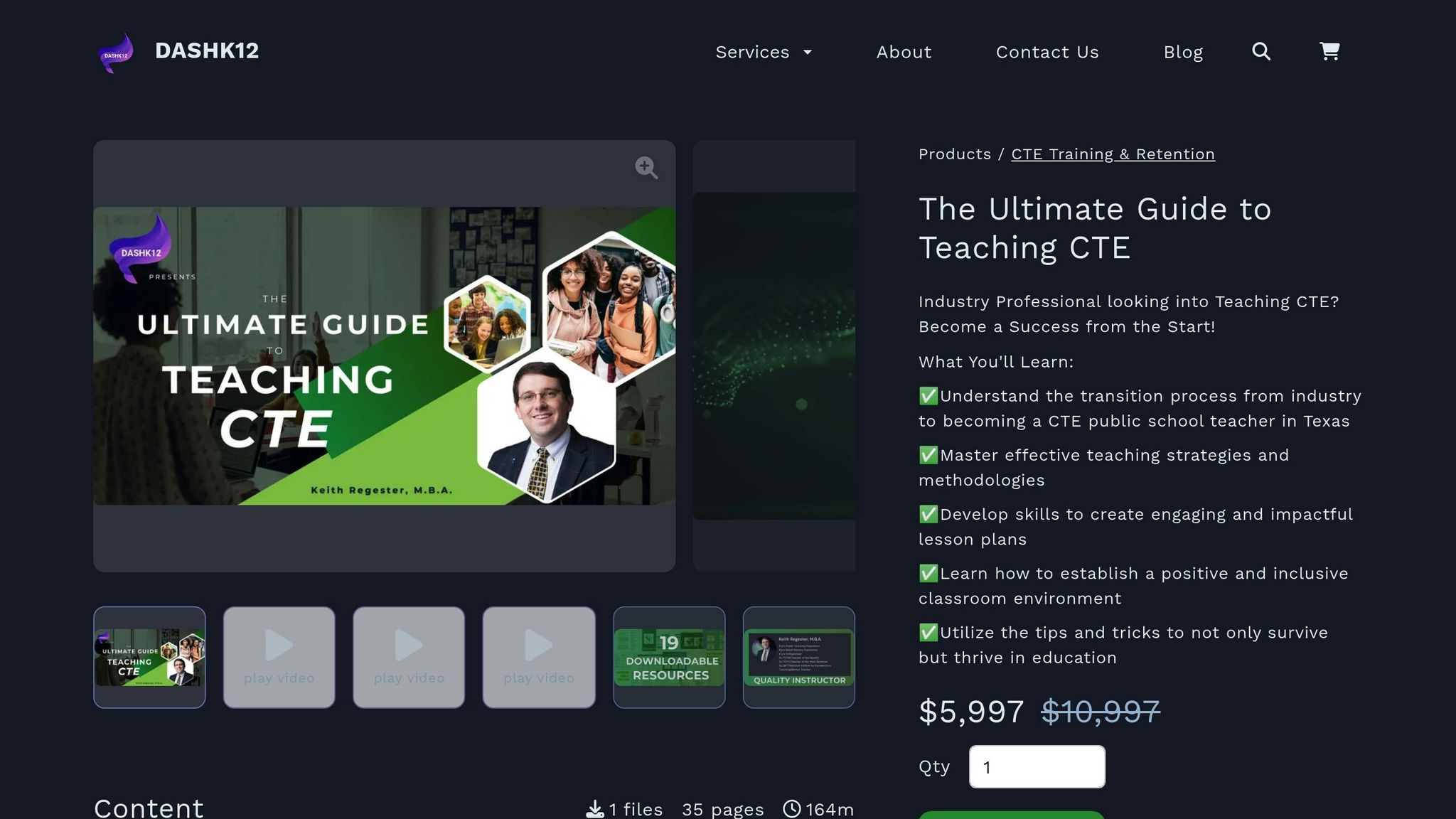
At the heart of DashK12’s offerings is its online course, The Ultimate Guide to Teaching CTE. Priced at $497, this self-paced program provides a clear, step-by-step framework to help educators - whether new or experienced - deliver career-focused lessons that meet industry standards. The course is packed with strategies that connect classroom learning to real-world expectations, ensuring students gain the tools they need to succeed professionally.
Rhonda Parker, M.Ed., an educator and business owner, shared her thoughts on the program:
"This LMS program is a thoughtfully designed professional learning experience that supports CTE teachers at every stage of their journey... Teachers gain strategies that enhance student engagement, align instruction with industry standards, and strengthen career readiness outcomes."
A key focus of the course is leveraging social media as a tool for professional differentiation. By incorporating these insights into your teaching, you can create a consistent and practical approach to networking that aligns with what employers look for in entry-level hires.
CTE Teacher Mentoring and Support Services
DashK12 goes beyond online courses by offering personalized mentoring led by Keith Regester, MBA, NIET Mentor, and seasoned CTE teacher. This one-on-one guidance is especially helpful for educators teaching soft skills like networking, which require a more nuanced approach. The mentoring services also include in-person workshops and customized team solutions, giving teachers additional tools to navigate classroom challenges.
Dr. Akweta Hickman, CEO of Amoxie Group, highlighted the platform’s impact:
"They are very client‑centered and innovative and were able to provide excellent services that have improved our technology approach."
These mentoring and support options ensure that teachers aren’t left to tackle the complexities of teaching networking skills alone. Whether you’re looking for help designing engaging classroom activities or need advice on structuring assignments, DashK12’s personalized support provides actionable solutions tailored to your needs. By integrating these resources, educators can confidently deliver networking lessons that are both practical and aligned with industry expectations.
Conclusion: Setting Students Up for Future Success
After diving into effective classroom strategies, let's reflect on one crucial takeaway: teaching high school networking lays a foundation of social capital that students can carry into their careers. In a world where professional landscapes are constantly evolving, these skills are not just helpful - they're essential.
Julia Freeland Fisher, Director of Education Research at the Christensen Institute, highlights this perfectly:
"Investing in networks is an equity imperative. When it comes to thriving, opportunity sits at the cross-section of what students know and who students know."
This quote underscores a powerful point: teaching networking is about bridging gaps in opportunity. For students without built-in professional connections, the relationships they form in high school could open doors to careers they might not have otherwise considered.
Networking isn’t an instant process; it takes time - often months or years - to see results. By teaching students to approach networking as a mutual exchange, where they contribute value and build trust, you help them cultivate relationships that can last well beyond graduation.
As an educator, your role goes beyond teaching the theory. By leveraging your own network, you can model the process and provide students with real-world connections. Whether it’s introducing them to professionals, facilitating conversations, or helping them navigate setbacks, your involvement can boost their confidence and encourage them to keep building their networks.
When students walk out of your classroom knowing how to identify their strengths, communicate professionally, follow up effectively, and maintain relationships over time, they leave with the tools to create opportunities for themselves. That’s a skillset that will serve them for a lifetime.
FAQs
What are the best ways for high school students to start building their network?
High school students can start building their network by tapping into the connections they already have. This includes family members, teachers, classmates, coaches, and mentors. These people can offer valuable advice, share their experiences, and even introduce students to professionals who might provide opportunities like job shadowing or career guidance.
To grow their network further, students can create a list of individuals they’d like to connect with, particularly those working in fields they’re curious about. Participating in school events, volunteering, or getting involved in community activities are excellent ways to meet new people. Strong communication and listening skills are key here - they help students leave a positive impression and form meaningful relationships that can support their ambitions down the road.
How do digital tools help high school students develop networking skills?
Digital tools have become a game-changer for teaching high school students how to network effectively. These tools go beyond face-to-face interactions, enabling students to connect and communicate with people across different locations and time zones. They also help students organize and analyze their networks while offering platforms to build professional identities through social media and online communication.
One standout benefit of these tools is their ability to support the development of personal learning networks (PLNs). Through PLNs, students can tap into mentorship opportunities, seek career advice, and uncover professional possibilities. By joining online communities and professional groups, they can explore career options and gain meaningful insights. In today’s connected world, digital tools are essential for equipping students with the skills and connections they’ll need to thrive in the future.
How can teachers help high school students build and maintain their professional networks?
Teachers can play a crucial role in helping students build and sustain their networks by teaching them how to form meaningful connections and stay actively engaged over time. One effective approach is encouraging students to create personal learning networks (PLNs) - a web of connections with peers, professionals, and organizations that can offer mentorship, advice, and career opportunities.
To develop strong networking skills, students should learn practical habits like following up after meetings, staying connected through emails or social media, and participating in networking activities. These activities might include school events, online forums, or professional groups. Highlight the value of reciprocity - the idea of giving help as well as receiving it - to nurture stronger, more balanced relationships.
Teachers can also incorporate hands-on activities that let students practice key networking skills. For instance, students can work on introducing themselves, sharing their interests, and exchanging contact information. By encouraging these habits, teachers equip students with the tools they need to build lasting, meaningful connections that can support their future goals.